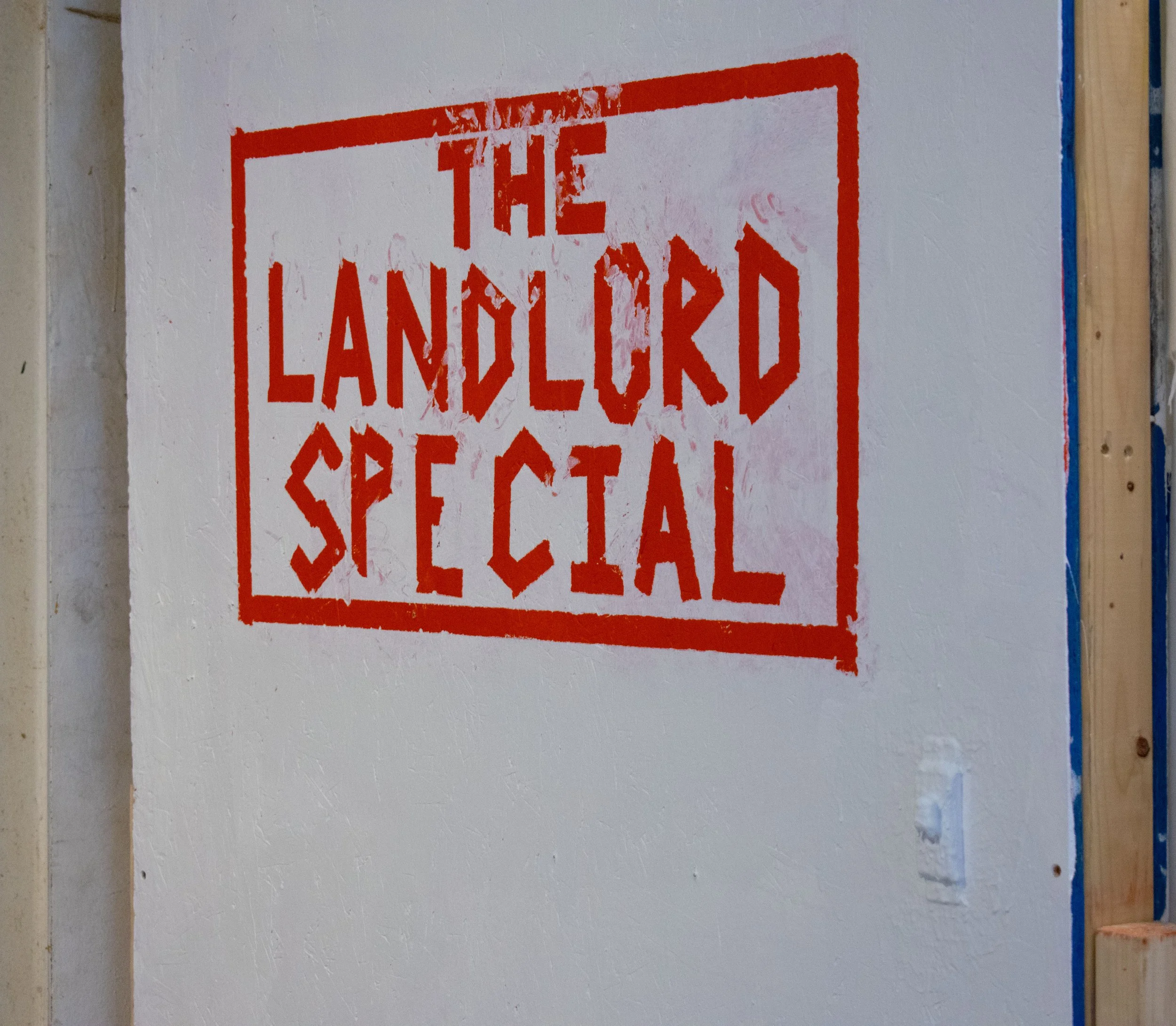
The Landlord Special (2026)
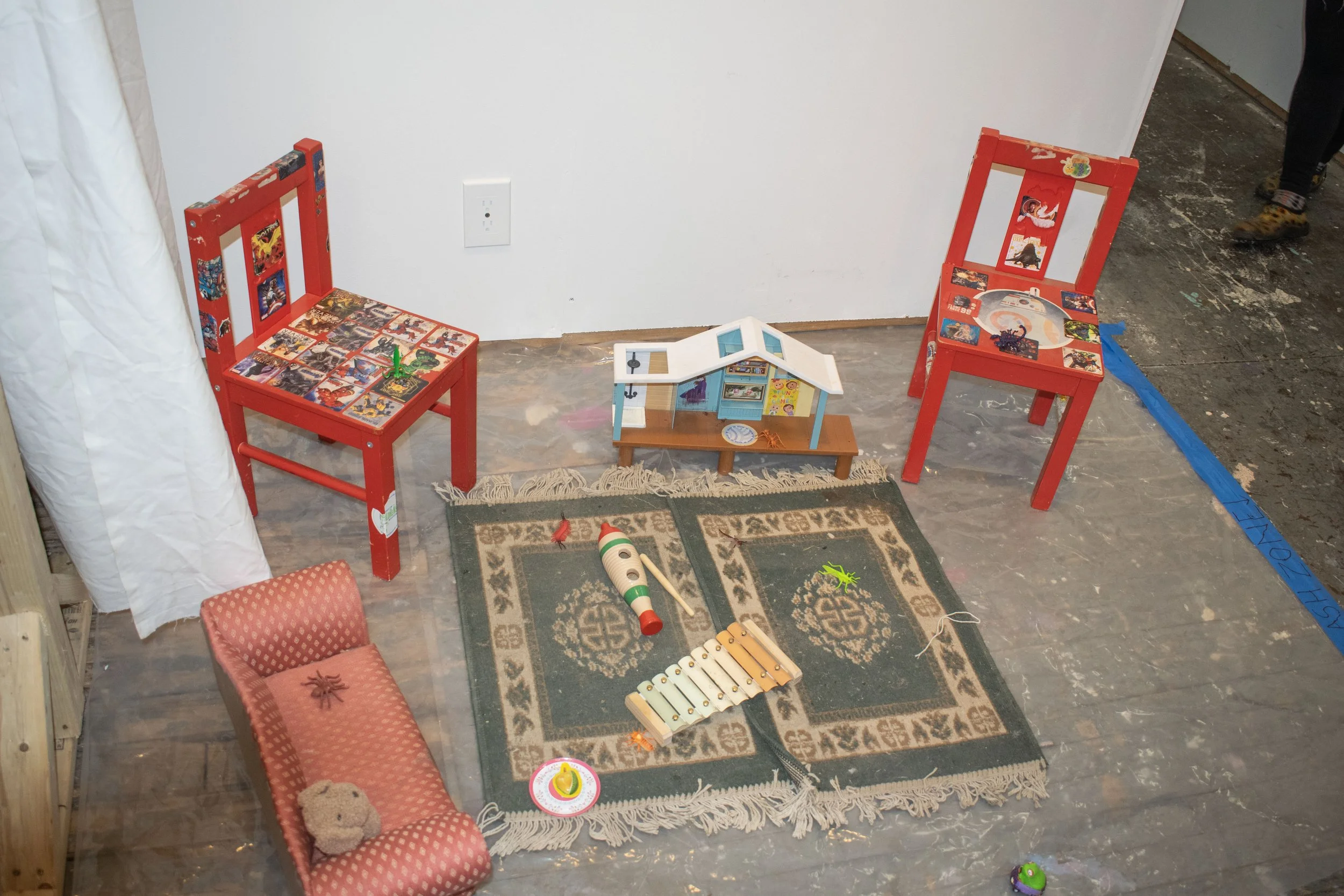
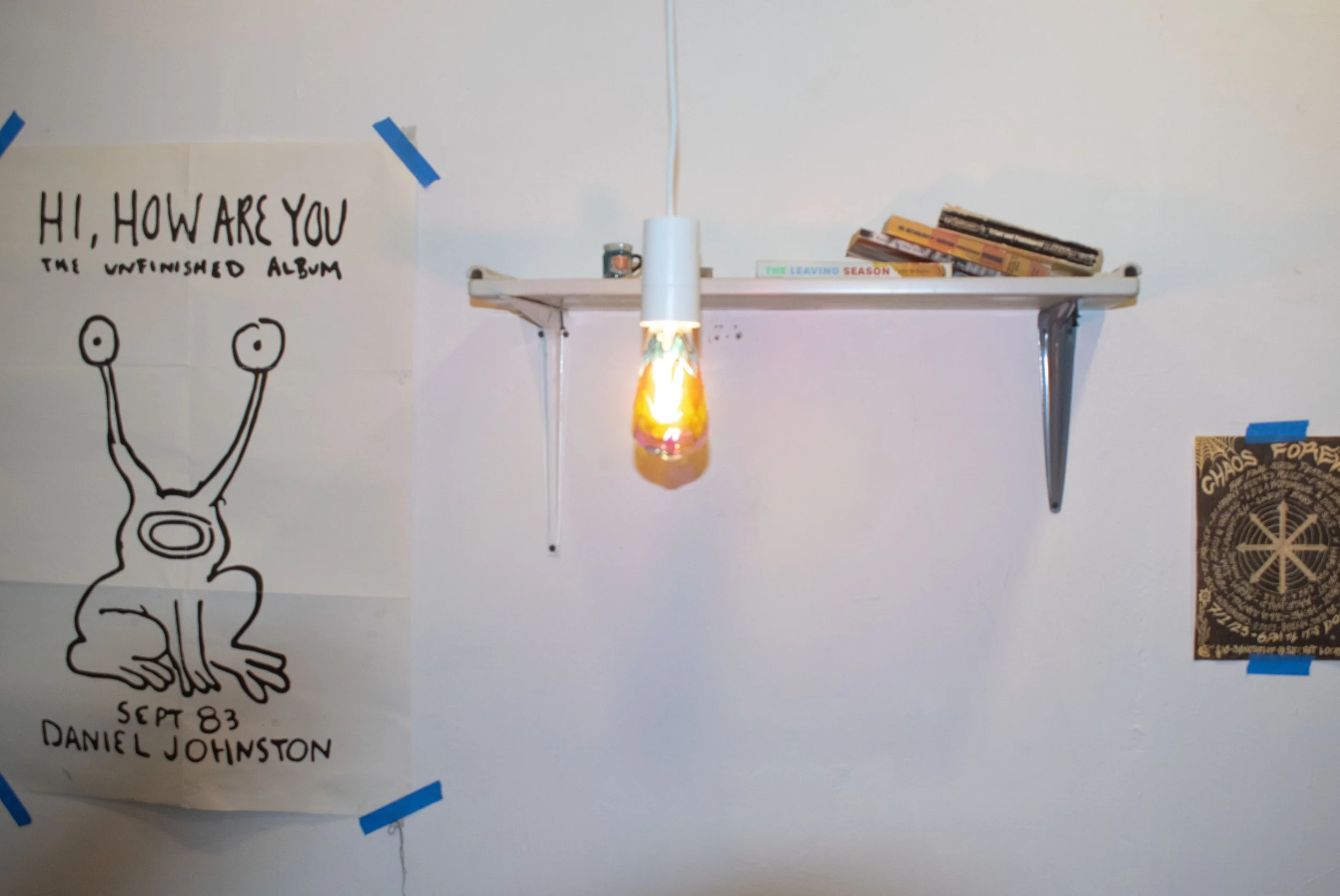
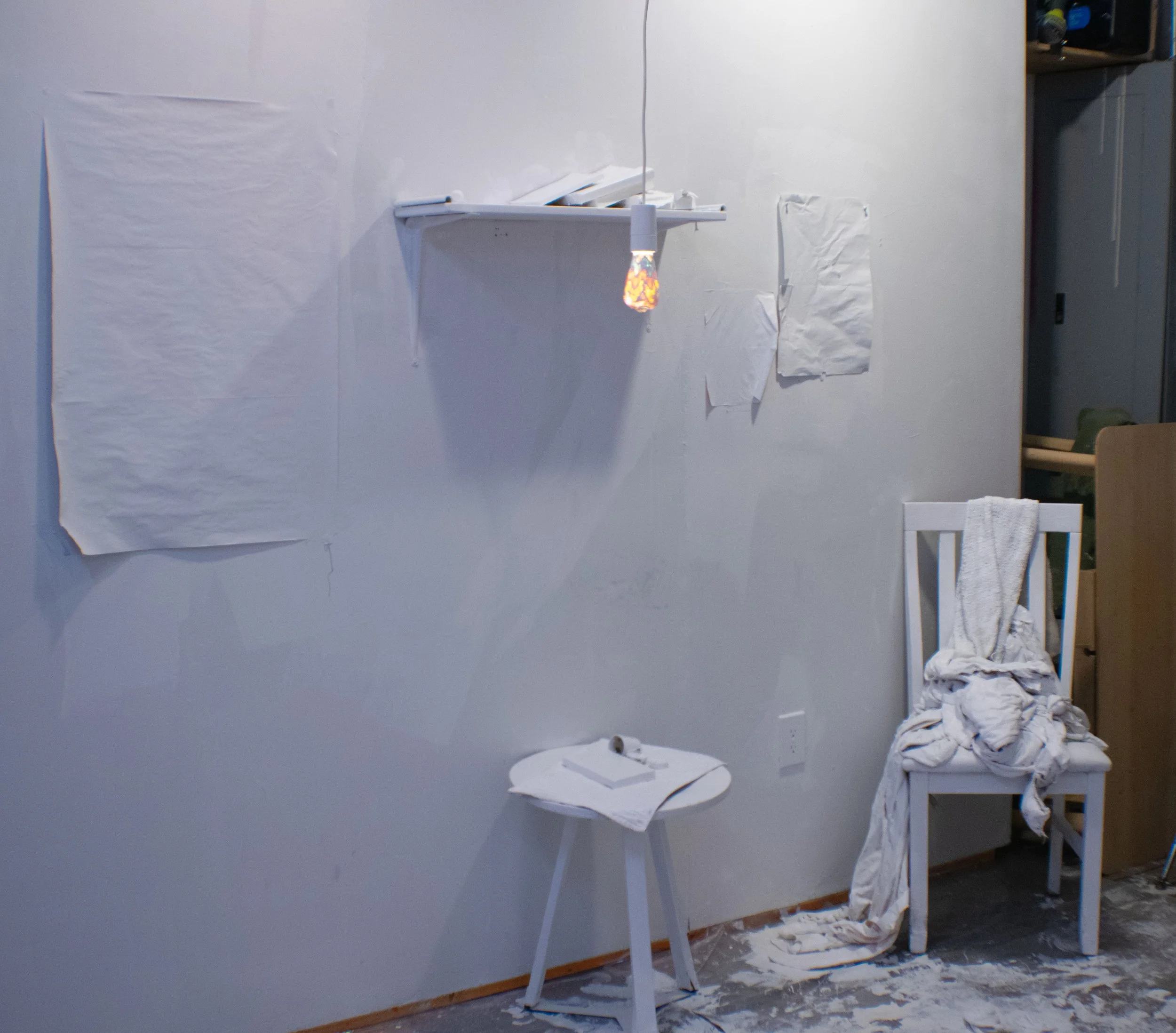
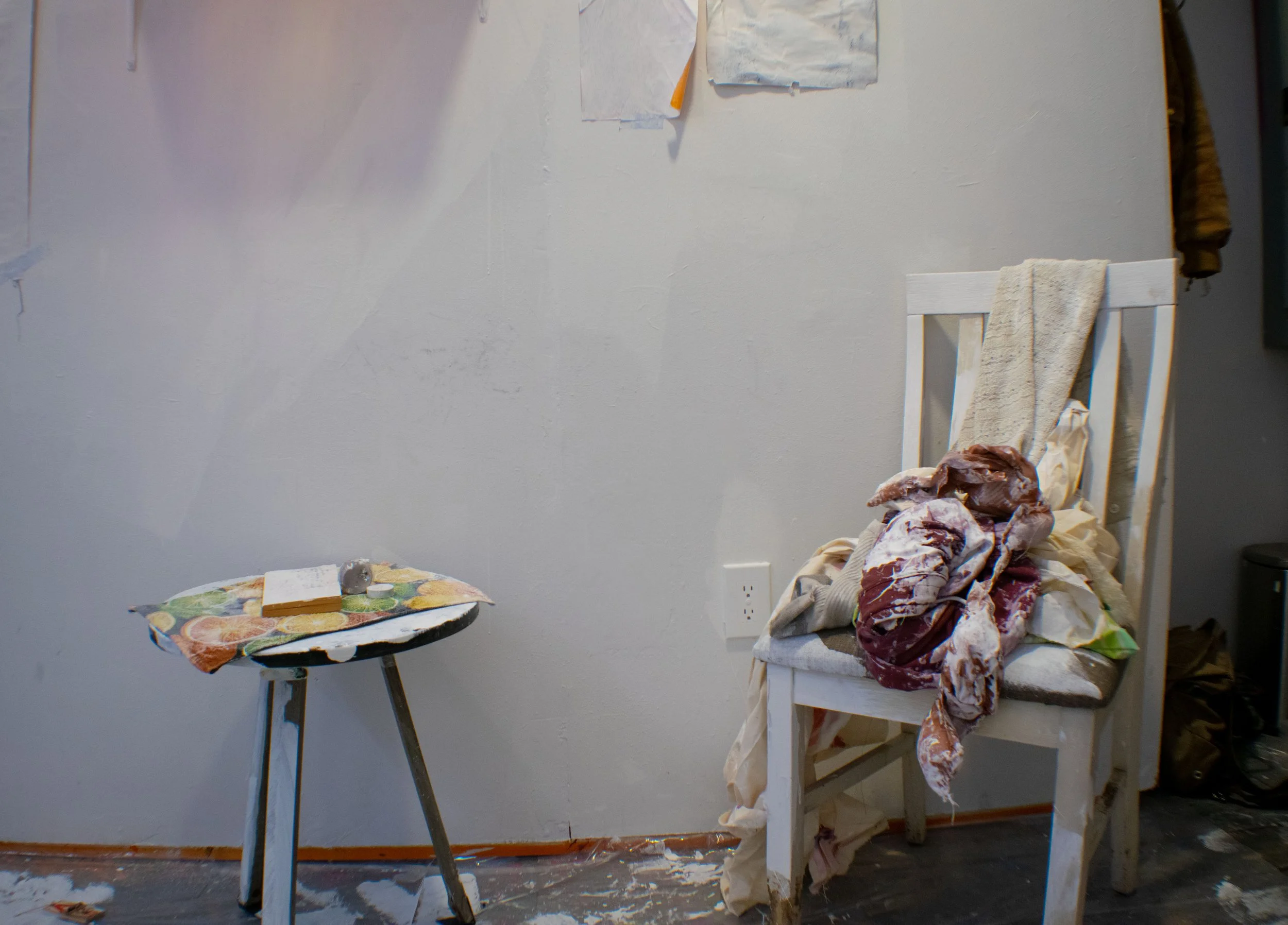
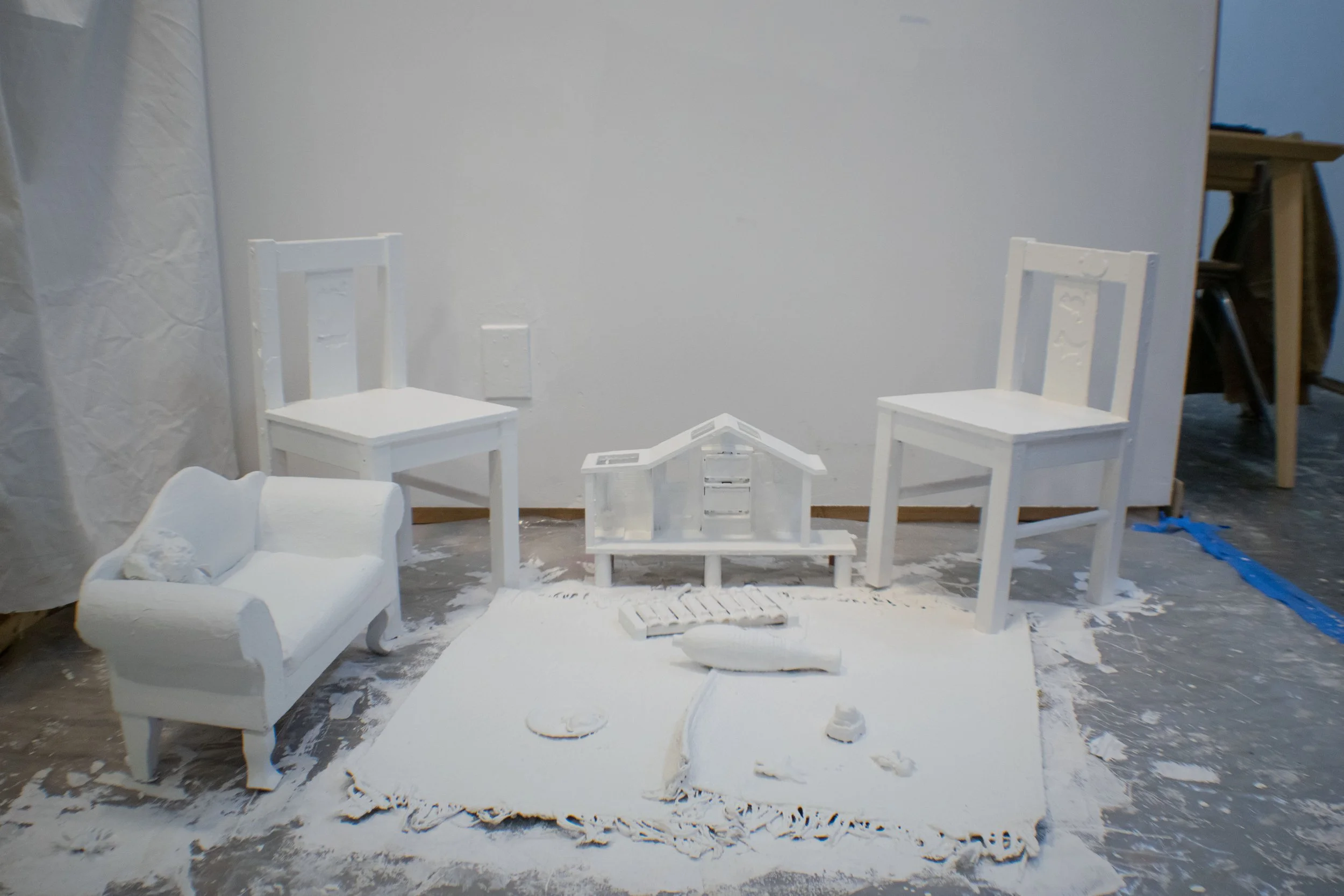
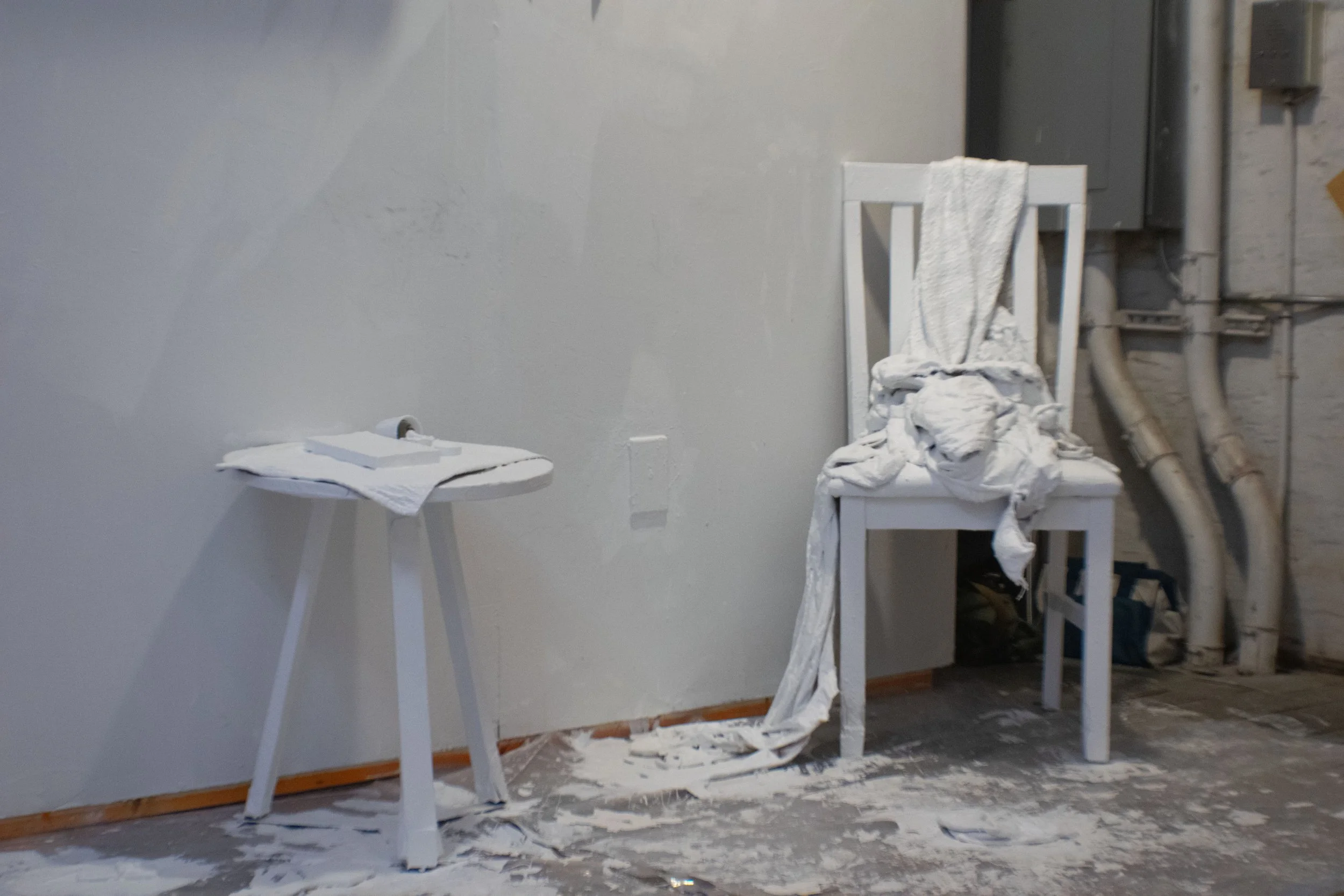
Two settings of two different apartments were painted over with white paint twice a day for the duration of the exhibition. The shapes and details of the people who lived becoming less defined, literally whitewashed away.
The “landlord special” is a joke title evoked to describe a specific kind of low effort, inexpensive “repair” or “remodel” of a rented apartment or house. While it has expanded to describe any limp ineffectual maintenance work done to minimize costs, the most memorable iteration of the landlord special is best represented as such: White Paint. Haphazardly applied either via spraying or inconsistently rolled. Paint covering important features (outlets, thermostats, door knobs, light switches, etc.) and rendering them unusable. Paint applied in an apartment that should have been cleaned or repaired first making subsequent repairs or cleans harder (holes in the wall, uneven drywall, objects on the wall or floor glued in place via paint) While dull gray paint has become the more typical choice of rental properties in gentrifying neighborhoods as it makes stains and scuffs less noticeable, white paint remains the cheapest option and the most notorious.
What you see is this practice repeated every single day of the installation’s duration. The objects shape and identifiable features growing amorphous with each layer of erasure. The pieces are coated with a layer of white paint twice a day every day for the duration of the install.
The landlord special itself serves more as a visually striking symptom of a power imbalance between those who own property and those of us who don’t. You see it more often in economically disadvantaged neighborhoods where residents have fewer alternatives in housing to turn to. The tenants don’t have the ability to fight for a decent place to live, so why bother giving them one? As apartments empty and walls are painted white so too do the building’s residents as it fills with students, artists, and others seeking affordable housing move in. The transitory nature of the clientele gives a landlord the opportunity to ignore structural issues and needed repairs, and you can raise the rent on young white people more quickly and safely.
The title of landlord itself calls to mind images of serfs and fiefdoms, structures of the medieval period still relevant in a city facing a massive housing crisis.
This installation was originally conceived of while I was living in an affordable but ultimately doomed artist collective in Bed-Stuy. The landlord had pulled our lease after two months of negotiations to remove illegal clauses (such as waiving the right to seek legal recourse if the landlord violated housing law), and I saw the writing on the wall that all 14 residents were likely going to be evicted by the year’s end. I began creating an installation in the room I used as a studio, a recreated bedroom filled with the things I was going to have to leave behind, covered in white paint. Layers and layers of it. Each item documented before it was painted and after, with titles taken from actual housing listings on craigslist.
I was wrong about how soon we would all be forced to find new housing, off by one month. The installation was left unfinished and abandoned. Documentation disorganized and scattered. What exists here now is the concept executed in miniature, with far less accounting of the individual objects and my ties to them impersonal and quick. It is considerably less thorough, which is more authentic both to how people are forced from their home experience the crisis and the nature in which a property manager would actually whitewash and cover up the repairs in a rental building. The individuality gone, whitewashed over. Identifiable silhouettes rendered abject and amorphous through the accretions. Evidence of lives lived left null and void.
While my desire to see this installation realized has its roots in far more serious issues of inequality and gentrification and in some cases xenophobia and racism, I do think there is some levity to be had. There is something comical in the mundane reality of people who commit evil acts, or are at least complicit in the systems that allow and encourage these things to happen. The character I’ve created is kind of a shitty dude, but he’s also kind of lame and pathetic in a way that I find funny and at times relatable. For him this is just a lame job that he wants to finish up quickly, to tune out and focus on his small joys. Having a bit of fun at his expense is cathartic, and it should be!
Currently ICE is forcibly, violently detains people from their homes: both in the literal sense of buildings and the more figurative metaphorical sense in that they are removed from their communities and constructed lives. In Minneapolis at least, banks and local law enforcement have refused to comply with ICE’s demands to foreclose and seize the property that these people were purged from. I thought that this was notable, because it is out of the ordinary. Somebody moving into a newly remodeled apartment or house in Texas or somewhere closer like Brownsville may not recognize or be aware of the previous tenants, of the remnants of their lives, but they exist. Pinholes left unfilled a remnant of a poster in a teenager’s room, scrapes on the floor from chairs pushed in at dinner, a water stain on the ceiling a long point of contention between resident of nine years and the building’s maintenance person. In Minneapolis, at least for right now, these artifacts still remain. There are still toys on the floor and dust accumulating in the corners, but they may be white soon.